
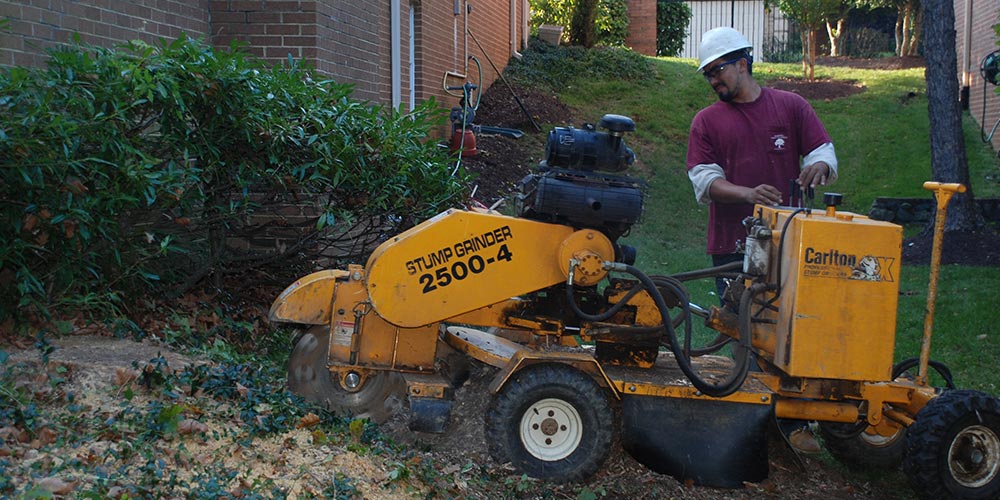
Guide to Tree Stump Removal
Tree stumps can be an unsightly blemish on your yard and take up valuable gardening space, but they can also pose safety risks and damage to your home’s wood. This article will cover all you need to know about stump removal and grinding.
We will discuss why you should get your stump removed, what is involved in the process, and how much it will cost. So, whether you want to improve the appearance of your home or protect it from potential damage, read on for all the information you need.
While tree removal by tree services providers is not an easy task, it is usually simpler than stump removal and grinding. Stump grinding is a significantly more complicated process, which is why it is rarely included in the tree removal cost. This causes people to leave old stumps in their yards. And it’s not a good thing.
Why should you remove a tree stump?
The most prevalent cause for stump removal is aesthetics. They can be a major eyesore in otherwise attractive surroundings, but they can also represent a safety risk if the region is overgrown.
If there is garbage or tall grass around the stump, people may trip and injure themselves, ranging from stubbed toes to shattered bones.
Tree stumps eventually deteriorate and can spread decay, attracting unpleasant illnesses and pests to your land. In some circumstances, tree stumps can cause more serious problems for the wood in your home, such as termites and carpenter ants.
If you had to remove a diseased tree but left the stump, the disease could spread underground from the roots to other plants in your yard. By failing to remove the stump, you are inviting disease transmission.
Stump removal vs stump grinding. Which one is better?
Stump removal is the process of removing the tree’s remaining roots and structure. If the tree roots have extended across the majority of your lawn, you will want some heavy-duty machinery.
To eliminate the tree’s root system, the entire yard may need to be upturned. When clearing a lot for new development, most homeowners prefer thorough stump removal over grinding.
Stump grinding does not remove the tree’s roots and is less invasive than complete stump removal.
This makes it a more manageable option for homeowners to remove a stump for cosmetic reasons. Tree service firms use a stump grinder to shave what remains of the tree until it is recessed into the ground.
While it does leave a hole in your yard, you can quickly cover it with dirt and grass, creating a perfect yard with no evidence of the prior tree.
How to remove a tree stump
Before beginning the stump removal process, it is critical to analyze the stump and select the most effective approach to remove it. The size, age of the prior tree, and quantity of stumps to remove are all taken into account. To identify the best course of action, schedule a consultation with an ISA Certified Arborist.
There are various ways to eliminate the stump. The most typical option is to engage a local stump removal business. This is the safest and most dependable method for removing a stump, but it can also be done by hand or with chemicals.
How to grind tree stumps
Stump grinding can be dangerous, so be sure you have the right gear and know how to use it. For the average homeowner, attempting to remove a stump incorrectly might lead to problems later on. Hence, it’s best to trust a reliable tree service company to complete this process promptly and safely.
The first step in stump grinding is clearing the area of debris. You then cut the stump low to the ground with a chainsaw. You then use a hydraulic grinder to sweep the stump from side to side. You continue this technique with progressively lower settings until the stump is 6-8 inches deep in the earth.
If the stump was giant, you might have a significant amount of woody debris left over, which can be used as mulch for other plants and trees in your yard.
Removing a tree stump by hand
If your tree is small, old, and rotting, you might be able to remove the stump yourself.
- Use a chainsaw to cut any lower branches from the trunk.
- Remove the top piece of the trunk, leaving some for leverage.
- To dig up the roots, shovel around the stump.
- Cut the primary roots with an ax. Push the trunk to uncover and clip further roots. Continue until the trunk is completely uprooted.
- You can wrap the tougher trunks in a chain and attach them to a four-wheel-drive truck. Slow back-and-forth movement might help jiggle the trunk until it becomes dislodged.
Removing the stump using chemicals
There are products available that can soften the stump and make it easier to remove. When dealing with chemicals, exercise caution. Wear protective clothes and make sure the product does not leak on other plants.
- Use a chainsaw to remove as much of the stump as possible
- Drill holes around the stump’s perimeter and midsection. These holes should be approximately one inch broad and eight inches deep.
- Pour the potassium nitrate into the perforations.
- Fill each hole with water.
- After four to six weeks, the stump should be extremely spongy.
Use an ax to break up the stump.
Cost of stump removal
There is no definite cost of stump removal. This is because several factors influence the price of stump removal, including stump size, accessibility to the stump, location, quantity of root removal, equipment costs, and whether or not you want clean-up processes.
You should take your time to compare the prices of different companies and settle on the one that gives you the most value for your money.
Parting shot
Without the proper tools and skills, tree stump removal and grinding can be difficult and dangerous. Improper stump removal can have long-term consequences for the rest of your environment, attracting pests and illnesses as they degrade.
You can remove the tree stump by yourself, but for the best outcome, work with experienced tree removal services Bethesda who know what they are doing and will safely remove the tree stump.