
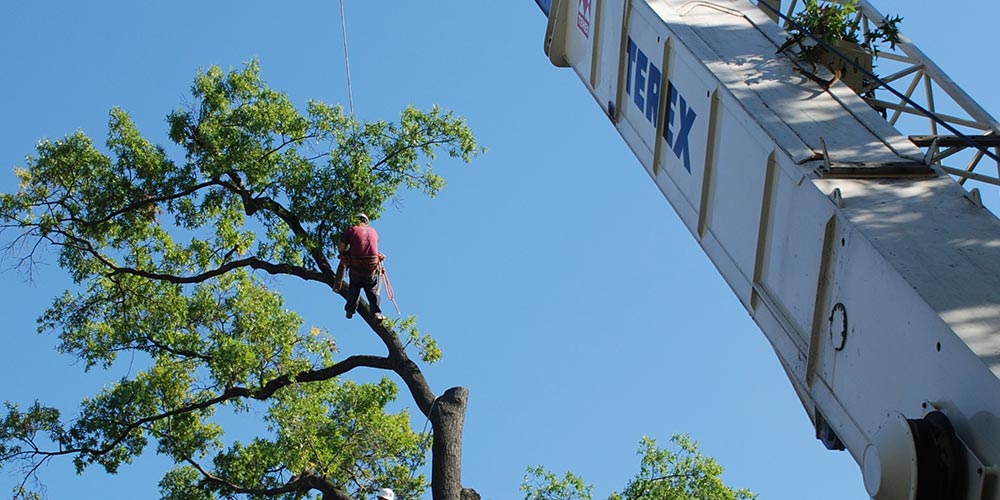
How Do You Know If a Tree Is in Danger of Falling?
When high winds, ice, and rain hit, even robust and healthy trees can pose a serious risk. You are at risk of having fallen trees and damaged limbs due to moist soil, lake-effect storms, and strong gusts.
Every year, homes suffer from storm-related property damage that can be avoided with a timely inspection.
A falling tree not only endangers your home, but it can also damage electrical lines, block driveways, and require costly roof and fence repairs. The problem is that many deadly trees don’t appear unstable until it’s too late.
Thankfully, professional evaluation and preventive care can make all the difference. Have you been wondering how to tell if a tree is in danger of falling? Well, there are several things you can look out for.
These things, as given by arborist services, include:
Severe lean
A slight lean isn’t usually cause for concern, but a sudden or rising tilt suggests a weakened root system.
Saturated soil from heavy rains or melting snow can loosen roots, making even massive trees insecure.
To tell whether a tree is at risk of falling, look out for:
- The tree appears to be tilting more following the recent storms.
- Roots coming out of the ground.
- Cracks or mounds of earth forming at the base.
You shouldn’t wait for the next windstorm. Consult a trained arborist, who will help you assess whether the tree can be stabilized or if removal is the best solution.
Fallen branches
Falling limbs are common during storms and severe winds. If a limb has died, a strong wind can easily bring it down, which is usually not cause for concern. If you notice a tree falling branches for no apparent cause, you should conduct a thorough investigation.
If you observe degradation in the area where the break occurred, there’s a significant likelihood it’s also present elsewhere in the tree. As deterioration progresses, the tree’s structural integrity may fail, making removal an immediate necessity.
Damaged roots
The roots are a tree’s anchor. Unfortunately, construction, soil erosion, or poor drainage can weaken them, putting the entire tree at risk of toppling.
This is especially typical in older neighborhoods with walkways and driveways that intersect root zones.
Warning signs that your tree might be a huge risk include:
- Visible or damaged roots
- Fungal growth, or mushrooms, near the trunk
- Fractured or raised soil on one side of the tree.
These are significant indications that the tree may be unable to withstand another severe storm, and you should highly consider removing it to avoid danger in the near future.
Mushrooms on the tree
What appears on the surface is sometimes only half of the story, and this is especially true when it comes to mushrooms. While the presence of mushrooms may not be considered a severe problem, they do have a massive underground network of fungal filaments that extend through the surrounding wood and soil.
As fungi pass through your tree’s roots and trunks, they digest and weaken it. If you observe a fungal growth at the base of your tree, scheduling an inspection with an experienced professional is a good idea.
Cracked tree trunk
A visible split or fracture in the trunk suggests a structural issue with the tree. These open wounds attract insects, fungi, and other pests and illnesses to the tree. This depletes the tree’s nutrients, further weakening it.
You should note that concerns tend to worsen during a storm, which can cause the tree to topple, and you don’t want that.
Dying branches
If your tree’s upper branches are brittle, leafless, or fall unexpectedly, it is most certainly under severe stress. Dead limbs, known as “widow-makers,” can break off in severe winds and inflict significant property damage.
Common causes of dying branches include:
- Previous storm damage.
- Insect infestations (such as borers and beetles)
- Old age or illness
A great way to tell whether you have a healthy tree is to scratch a small bit of bark; if the layer beneath is brown rather than green, the branch is dead. In such a situation, deadwood removal can help to avoid bigger problems in the future.
Lopped tree
If your tree has been improperly pruned or lopped, it can pose a risk. Poor workmanship can result in sprouts that are poorly attached to cuts or branch stubs. These shoots are more prone to falling during heavy gusts.
When the shoots are little, they do not matter. However, they can grow quite quickly. They become dangerous when they reach 150 mm in diameter or ten meters in length.
During the inspection, look for branching branches that seem unique. Their branch connection may appear unusual, and several shoots may arise from the same location on the trunk or stem. These shoots frequently develop practically vertically and at a significantly faster rate than other branches.
Loss of leaf color and cover
If your tree’s foliage quickly fades or its limbs and canopy die, this can be a warning sign. These changes indicate that the tree is stressed and its health is deteriorating. Sick trees are more susceptible to storm damage.
You should look for yellow and brown leaves, dead shoot tips, huge branch dieback at the tips, and dead patches on broad limbs. If you find them, get in touch with a professional to help you decide on the next course of action.
How can you keep your trees from falling?
Some trees can withstand a storm, even if they appear beaten down or ill. It only requires minor care and upkeep. Even so, it’s best to act before the storm hits. Some of the things that you can do include:
Trimming: Hire an arborist to prune and trim your trees at least once a year. This way, you will be able to spot fall hazards before they worsen.
Some arborists offer bracing and cabling services to help trees grow stronger using metal wires and rods. This support can help to prevent structural breakdowns during storms.
If the tree is too weak, you should remove it before it injures anyone. Have a qualified tree removal services Bethesda come and inspect the tree. You should note that it will be cheaper to remove the tree before it falls than after, so always move with haste and get rid of the tree before it’s too late.