
Never Do This When Cutting Down a Tree
Sometimes you have no choice but to remove a tree from your yard or property. You may be clearing the area for landscaping, it may have caught a disease that threatens other trees, or it may just have grown too large for the available space.
Regardless of the reason you are removing the tree, doing it correctly requires care and attention, and mistakes can have catastrophic consequences. Before you make your first cut, here are a few things you shouldn’t do, as given by tree removal services:
Ignoring getting the permits
Many towns and local neighborhood HOAs (Homeowners Associations) have restrictions or prohibitions on cutting down trees in their yards. If you live in a residential neighborhood, you may need to obtain a permit, particularly for larger trees that could fall into your neighbor’s property.
Some towns and states also seek to retain control over tree removal to promote the growth of local flora and fauna. If your area requires you to have a permit to cut a tree, ensure that you get it before you begin the cutting.
You should note that failing to get the permit can quickly get you on the wrong side of the law. And you don’t want this.
Not having the proper safety gear.
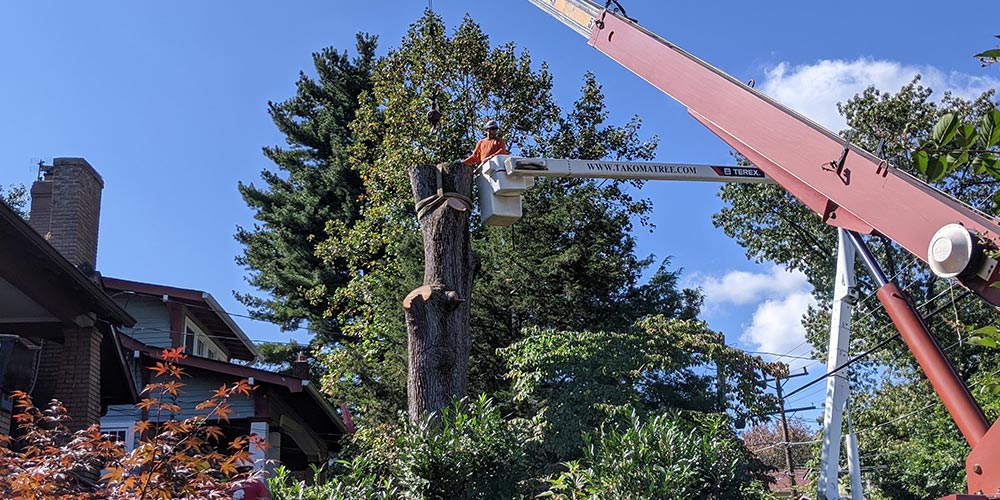
If you engage a local tree removal service, they will arrive with all of the necessary safety clothing and equipment, including a bucket truck for working on the largest trees.
If you’re going to perform the work yourself, make sure you have sturdy work gloves, sleeves to protect your arms from cuts or scrapes, and safety glasses to protect your eyes from flying wood chips.
Many workers prefer wearing a mask to avoid breathing wood dust. A hard hat is also a good option for trees that are exceptionally tall or large. If you’re using a chainsaw, you’ll also need hearing protection and felling wedges to guide the tree as it falls.
Don’t use the wrong tools.
To choose the best tree-cutting equipment, consider the tree’s size. Heavy-duty handsaws can tackle trees up to 15 feet tall with branches and trunks several inches in diameter.
They’re also a fantastic choice for cutting branches in narrower spaces where a chainsaw can’t reach, or when you’re on a ladder. Plus, they’re much quieter for the neighbors.
When possible, use an arborist handsaw with large, specialized teeth for removing branches. Check that the grip on the handle is firm and steady, and that the teeth are clean and sharp.
When a trunk approaches six inches in diameter, it’s time to upgrade to a chainsaw for better speed, comfort, and control. Chainsaws exist in a variety of sizes, so it’s critical to select the appropriate one for the job.
Generally, you want a saw blade that is at least a few inches longer than the breadth of the tree trunk. A shorter blade demands more effort and poses more risks. The larger the chainsaw, the more vibration it produces and the greater the strength and experience required.
Check the gas and oil levels, adjust the chain tension as needed, and sharpen the chainsaw if it has been used previously. If you have no experience using a chainsaw and are unfamiliar with fundamental chainsaw techniques, such as preventing kickbacks when engaging the chainsaw tip, leave this tree removal endeavor to the pros.
Don’t cut without a felling zone.
Planning the felling zone is a key step in safely chopping down a tree. Walk around the tree at roughly the same distance from it as its height, looking for any impediments, such as fences, rooftops, power lines, and garden bushes.
Remove any barriers you can, then prepare to chop the tree so it (hopefully) falls into an unobstructed area. This is the area where your notch will face when you begin cutting.
If your tree has a noticeable lean or overgrowth on one side, it will most likely affect its fall angle. You should clear a fall zone aligned with the tree’s natural lean, and even consider using tree wedges for added safety.
You should note that even little trees can become shockingly heavy when they begin to fall, and if your tree is larger than a sapling or decorative species, you will have little control over the fall.
Prepare a few escape routes in case it falls unexpectedly. Never try to catch a falling tree, even if it is about to land somewhere you don’t want it to.
Don’t ignore the notch method.
The notch approach is practical when cutting a large tree. To adjust the angle at which the tree falls, cut a triangle-shaped notch into its base first.
To cut a notch, begin at shoulder and waist height, then slant down at a 45-degree angle to the ground. Cut around one-third of the way into the trunk.
Then, make a second cut a few inches above the first, parallel to the ground. Curve it down to meet the first cut, then finish the notch so that you remove the trunk’s wedge.
The tree should not fall at this time. That’s why larger trees over a foot in diameter often require felling wedges to prop up the notch. You will make a final horizontal cut on the opposite side of the tree, about an inch above the notch’s acute angle.
As this final cut reaches the notch, the tree frequently begins to fall (or can be directed at the appropriate time by removing the tree wedges). Your lookout is typically able to alert you when the tree begins to lean. At this point, you can adjust the cut to control the fall better, keep out of harm’s way, and shout warnings.
Parting shot
Cutting down trees carries significant risks for unskilled homeowners. If a tree trunk is a foot or larger in diameter, it can cause substantial harm to you or your property if chopped carelessly.
You’ll also need more tools, such as tree wedges, to avoid harm and manage the fall, as well as safety harnesses to make cuts higher up in the tree. If you don’t have much experience cutting large trees, you’d be better off hiring a tree cutting services Kensington professional to help you out.