
What is the Best Time of Year to Remove Trees?
You may have heard that trees are cheaper to remove in the winter or that summer is the most expensive period to remove trees.
You should know that the cost of removing a tree is determined by a variety of factors. The price is determined by the size, location, and needs of your specific tree, rather than the time of year. Some local jurisdictions even have rules that govern the tree removal procedure.
Working with a qualified arborist services provider will provide you with the best value for your money after the project is completed. They have experience and insurance, and the rigorous certification process ensures that they will be informative and upfront during the removal process. So they’ll help you navigate those ordinances.
How do you tell your tree is ready for removal?
Saying goodbye is never easy, especially when it comes to your tree that has been there since you moved home. Unfortunately, there are situations when it is essential for both your landscape and your safety. It can be tough to know when to cut down a tree.
So, these are the top symptoms that you should take down your tree:
The tree is too close to your house
Trees that grow too close to your home or other structures on your land might cause significant problems. Is that tree close to your house? Its roots may elevate the foundation; therefore, you should treat the issue as soon as possible.
Even if the tree isn’t right up against your house, branches touching the siding can cause mold growth. To avoid problems, stick to your tree care routine and trim it on a regular schedule. Trees can also block the sun from reaching certain areas of your property, causing further mold issues that can be costly to repair.
To be on the safe side, ensure that your tree is between 10 and 30 feet away from your house to avoid potential harm. If this is not the case, consider removing it.
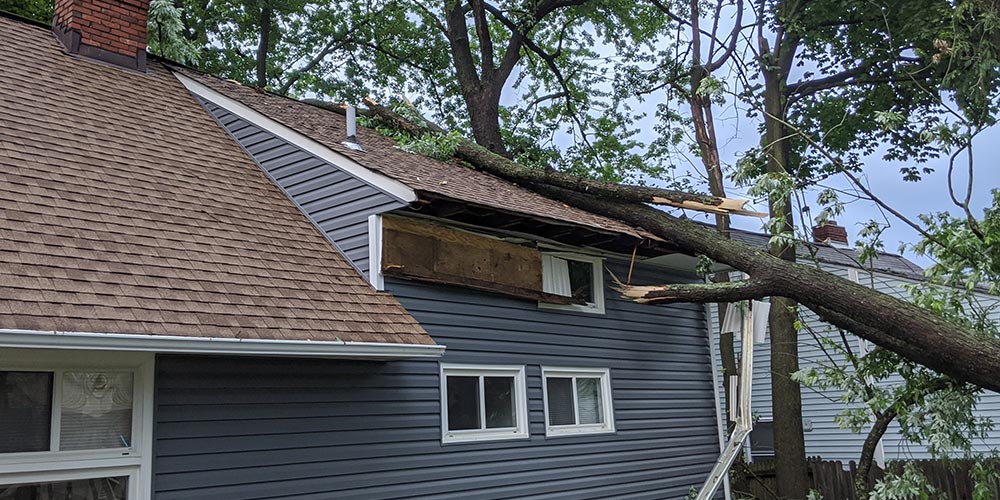
Your tree has been storm-damaged.
Storm damage can cause significant devastation to a tree, and it may or may not be repairable. When this occurs, you may be able to clip and prune away the damaged areas.
While this is the case, if you are dissatisfied with the tree’s appearance afterward, you may decide to have it removed. A local tree service will help you assess the damage and assist you in saving the tree, if possible.
The tree is no longer green.
A tree that has no visible new growth is most likely in a bad state. Weak and brittle limbs, dead or browning foliage, and a trunk that isn’t what it once was are all indications that a tree is beyond repair.
Compare the tree to the others on your property—how does it fare in terms of branch and leaf health? If the other healthy trees nearby are flourishing while this one appears to be withering, removing your dead tree may be your only option.
Insects severely damage the tree.
Numerous species of insects can damage trees. However, wood-burrowing bugs are often the most destructive and can kill trees. Invasive species that cause tree damage include bark beetles, emerald ash borers, and locust borers.
Discolored leaves, holes in the bark, or sawdust may indicate that a tree needs to be taken down due to insect infestation. You should have an arborist inspect your tree to see whether it is too late to preserve it.
You have invasive tree species.
Another issue to consider when removing a tree is whether it is an invasive species. Trees that are not native to the area can develop quickly, preventing other trees and plants from receiving water, nutrients, and sunlight.
This has a significant influence on both the ecology and fauna. Birds and creatures that rely on native trees for food and shelter may suffer as invasive tree species take over.
If you’re unsure whether the species is invasive, a professional arborist can determine the tree type and whether it needs to be chopped down.
The tree looks like it can fall anytime.
Does glancing at the tree make you feel nervous? That instinct is typically correct. When a tree begins to lean to one side or changes shape, it may fall.
Because this can cause significant harm to your home, it is best to take precautions and remove it.
There are many dead or dying branches on the tree.
The natural development cycle of a tree includes the occasional dead branch. While this is the case, if you are unable to keep up with the dying portions of your tree, this is a bad sign.
Large, dead branches at the crown of a dying tree are hazardous because they can fall quickly and forcefully. As a general rule, if more than half of the tree is in poor condition, it is time to cut it down.
The trunk is hollow
Finding holes or hollowness in a tree trunk is usually a bad sign. These indicate structural integrity issues, implying that the tree is deteriorating.
Even with the best tree care regimen, a weak trunk cannot effectively support all of its limbs, posing a hazard to your home or family. Branches, even large limbs, could fall at any moment.
The tree looks diseased.
A diseased tree will often show telltale signs. Diseases not only detract from the beauty of your tree, but they can also weaken it, increasing the likelihood of it falling over or losing limbs despite your best tree care practices. In some cases, the disease is treatable, and you may be able to remove the affected areas with tree trimming.
However, if the disease is severe, you should consider cutting down the tree. An ISA-certified arborist or a tree removal business can analyze the tree’s condition and the severity of the disease and help you get rid of it.
Parting shot
You now know that there is no best time to remove a tree. As long as the tree shows signs of damage, it’s time to remove it. As a rule of thumb, ensure that you work with experienced tree removal services Kensington providers who know what they are doing.